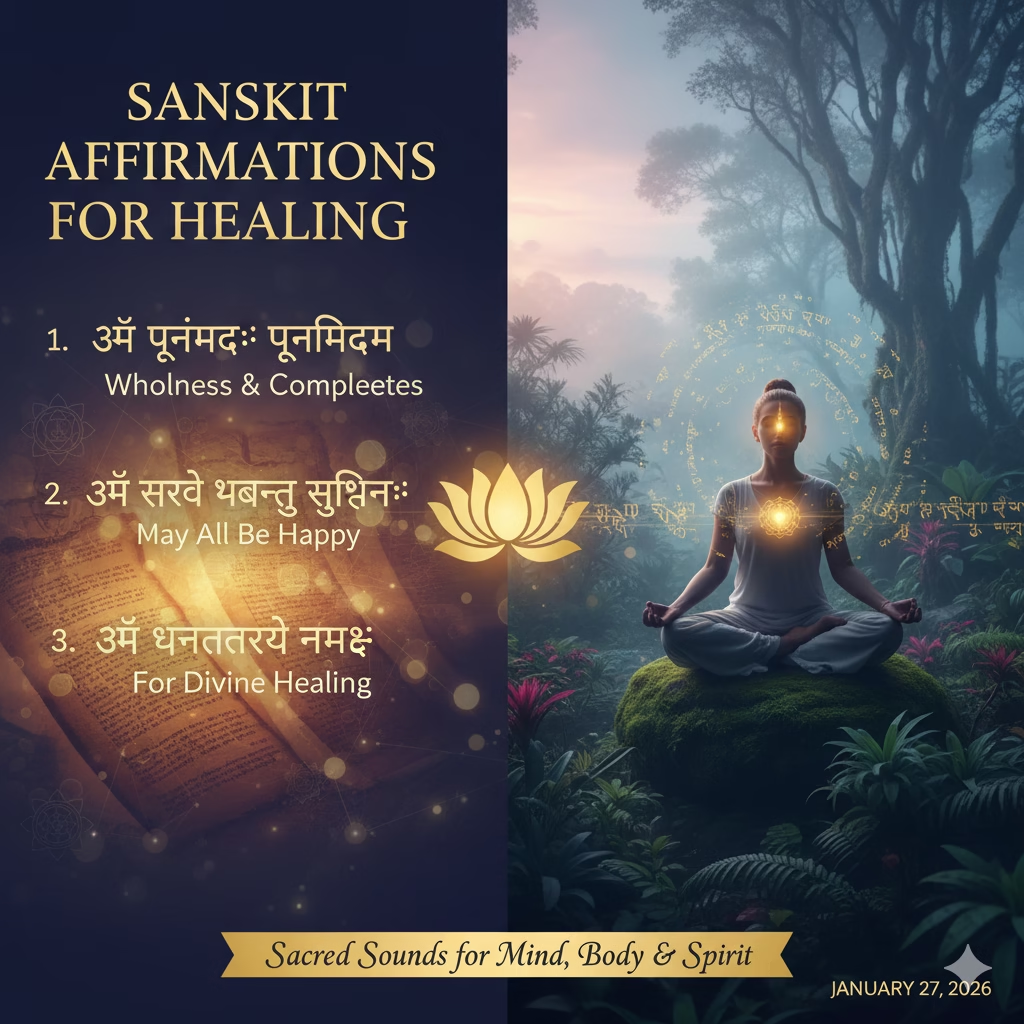
Sanskrit Affirmations for Healing

Healing

Introduction: Why Sanskrit Affirmations for Healing Matter Today

In a world where stress, anxiety, and chronic imbalance have become part of everyday life, people across the globe are rediscovering ancient tools for healing and inner stability. Among these tools, Sanskrit affirmations stand out as uniquely powerful. Rooted in one of the world’s oldest living languages, Sanskrit affirmations combine sound, meaning, and intention to support healing at physical, emotional, and mental levels.

Unlike modern positive affirmations that rely mainly on psychology, Sanskrit affirmations work on a deeper vibrational level. Each syllable carries a specific resonance that aligns the mind and nervous system with harmony. This is why Sanskrit mantras and affirmations have been used for thousands of years in Ayurveda, Yoga, and meditation practices.

In this guide, you’ll discover carefully chosen Sanskrit affirmations for healing, along with:

  • Clear English translations
  • Inferred, practical meanings
  • Healing benefits
  • Real‑life application methods
  • Use cases for modern lifestyles

Whether you are new to Sanskrit or already practice meditation, this article will help you integrate healing affirmations into daily life in a simple, accessible way.

Modern neuroscience is beginning to explain why these practices work, which we explore in detail in the science behind mantra chanting and its impact on the nervous system.

What Are Sanskrit Affirmations?

Sanskrit affirmations are short, positive statements or mantra‑like phrases expressed in Sanskrit that affirm wholeness, health, peace, and inner balance. While mantras are traditionally repeated for spiritual awakening, affirmations focus more directly on healing intentions and everyday well‑being.

Why Sanskrit Works for Healing

  • Phonetic precision: Sanskrit sounds are designed to stimulate specific energy centers (chakras)
  • Mind–body connection: Chanting regulates breath and calms the nervous system
  • Timeless wisdom: These phrases have been refined through centuries of contemplative practice
  • Universality: No belief system is required—only repetition and awareness

For global audiences, especially in Western wellness culture, Sanskrit affirmations offer a bridge between ancient wisdom and modern self‑care.

For moments of acute mental strain, you may also find relief in specific Sanskrit mantras designed for anxiety and overthinking.

How to Use Sanskrit Affirmations for Healing

Before diving into the affirmations, here are a few effective ways to practice them:

  • Silent repetition during meditation
  • Soft chanting with steady breathing
  • Writing the affirmation in a journal
  • Listening to recorded chants while resting
  • Repeating before sleep for subconscious healing

Consistency matters more than perfection. Even 5–10 minutes a day can bring noticeable benefits.

1. oṃ śāntiḥ śāntiḥ śāntiḥ 

English Translation: Om, peace, peace, peace

Inferred Meaning:
I invite peace into my body, mind, and environment.

Healing Benefits:

  • Calms anxiety and mental restlessness
  • Supports emotional healing
  • Reduces stress‑related physical symptoms

Application Use Cases:

  • After a stressful workday
  • During recovery from illness
  • Before sleep to quiet the mind

Practice Method:
Chant slowly three times, focusing on releasing tension with each repetition. Allow the sound of “Shāntiḥ” to soften your breath.

2. sarve santu nirāmayāḥ

English Translation: May all beings be free from illness

Inferred Meaning:
Healing flows through me and extends to others.

Healing Benefits:

  • Cultivates compassion and emotional balance
  • Reduces feelings of isolation during illness
  • Encourages holistic healing

Application Use Cases:

  • Caregivers and healers
  • During group meditation or prayer
  • When supporting loved ones through recovery

Practice Method:
Repeat gently while visualizing light spreading from your heart to your entire body and beyond.

3. ahaṃ svasthaḥ asmi

English Translation: I am healthy

Inferred Meaning:
My natural state is balance and well‑being.

Healing Benefits:

  • Reinforces positive body awareness
  • Supports recovery and immunity
  • Helps reframe negative health narratives

Application Use Cases:

  • During physical healing journeys
  • Alongside medical or therapeutic care
  • Daily wellness routines

Practice Method:
Repeat 9–21 times in a calm voice, syncing each repetition with a slow inhale and exhale.

Healing

4. prāṇaḥ mama balavān asti

English Translation: My life energy is strong

Inferred Meaning:
Vitality flows freely through me.

Healing Benefits:

  • Boosts energy and motivation
  • Reduces fatigue and burnout
  • Enhances breath awareness

Application Use Cases:

  • Morning affirmation for vitality
  • During pranayama or yoga
  • For people experiencing low energy

Practice Method:
Chant while inhaling deeply and exhaling slowly.

5. manaḥ mama prasannaḥ asti

English Translation: My mind is calm and joyful

Inferred Meaning:
Mental peace is my natural state.

Healing Benefits:

  • Supports emotional healing
  • Reduces overthinking
  • Improves focus and clarity

Application Use Cases:

  • Anxiety management
  • Before important decisions
  • During mindfulness practice

Practice Method:
Repeat silently during meditation, observing thoughts without attachment.

6. dehaḥ mama svasthaḥ balavān ca

English Translation: My body is healthy and strong

Inferred Meaning:
I trust my body’s intelligence to heal.

Healing Benefits:

  • Encourages body positivity
  • Supports physical rehabilitation
  • Builds resilience mindset

Application Use Cases:

  • Fitness and wellness routines
  • Post‑injury recovery
  • Daily self‑care rituals

Practice Method:
Repeat while placing a hand on the heart or affected area of the body.

When affirmations are combined with breath awareness, the effects deepen, as explained in breathing practices that integrate mantra chanting for calmness and clarity.

How to Integrate Sanskrit Healing Affirmations into Daily Life

  • Morning ritual: Set the tone for the day
  • Workplace breaks: Reset mental energy
  • Evening wind‑down: Release accumulated stress
  • Healing routines: Support physical and emotional recovery

You don’t need fluency in Sanskrit—intention and consistency matter most.

Final Thoughts:

Sanskrit affirmations for healing offer a gentle yet profound way to reconnect with your natural state of balance. In a fast‑paced world, these ancient sounds remind us that healing does not always require effort—sometimes it begins with listening, breathing, and repeating.

By integrating these affirmations into daily life, you create space for calm, resilience, and holistic well‑being—one sound at a time.

Explore more Sanskrit wisdom, affirmations, and mantras at Simple Sanskrit to deepen your healing journey.

FAQs

1. What are Sanskrit affirmations for healing?

Sanskrit affirmations for healing are short, positive statements in Sanskrit that promote physical, mental, and emotional well-being through sound vibration, breath awareness, and intention.

2. How do Sanskrit affirmations help in healing?

Sanskrit affirmations help calm the nervous system, reduce stress, and create positive mental patterns. Their rhythmic sounds support relaxation, emotional balance, and holistic healing.

3. Are Sanskrit affirmations scientifically proven?

While Sanskrit affirmations are not medical treatments, studies show that repetitive chanting, slow breathing, and positive affirmations activate the parasympathetic nervous system and reduce stress-related symptoms.

4. Can Sanskrit affirmations be used for physical healing?

Yes, Sanskrit affirmations can support physical healing by reducing stress, improving mind–body awareness, and reinforcing a positive healing mindset alongside medical care.

5. Are Sanskrit affirmations religious or spiritual?

Sanskrit affirmations are not religious. They are linguistic and vibrational tools and can be practiced by anyone, regardless of belief system or spiritual background.

6. How often should I practice Sanskrit affirmations?

For best results, practice Sanskrit affirmations daily for 5–10 minutes. Consistent practice matters more than duration.

7. Do I need to pronounce Sanskrit affirmations perfectly?

Perfect pronunciation is helpful but not mandatory. Intention, consistency, and mindful repetition are more important for healing benefits.

8. Can beginners practice Sanskrit affirmations?

Yes, beginners can easily practice Sanskrit affirmations. Starting with simple phrases and slow repetition is enough to experience benefits.

9. Can Sanskrit affirmations be combined with yoga or meditation?

Absolutely. Sanskrit affirmations work especially well with yoga, pranayama, meditation, and mindfulness practices.

10. When is the best time to chant Sanskrit affirmations?

Sanskrit affirmations can be practiced in the morning for vitality, during the day for stress relief, or at night for relaxation and emotional healing.

Author

  • Deep Ranjan Singh - Simplesanskrit.com Founder

    Deep is a Sanskrit learner and teacher. He has done his Engineering graduation from IIT Kanpur. He worked in the Information Technology sector serving Investment banks for ten years. He served as a Counsellor, Life Coach and Teacher, post his corporate career.
    Deep pursued the study of scriptures in search of the hidden treasures of valuable knowledge shared by the Rishis. In the process, he realized the need to learn Sanskrit. He, therefore, learned Sanskrit through self-study and Certification courses. Presently he spends a good chunk of his time sharing useful Sanskrit resources with all the Sanskrit lovers.
    You can reach him at deep@iitkalumni.org.

    View all posts