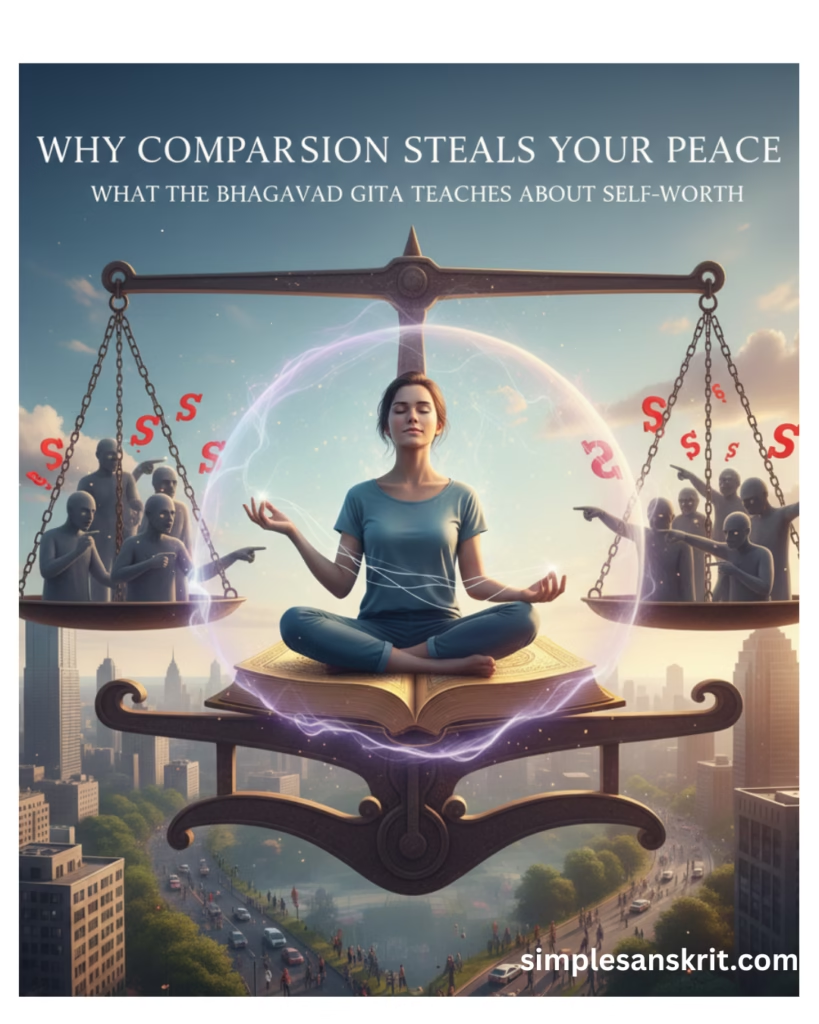
Why Comparison Steals Your Peace (And How to Stop It): What the Bhagavad Gita Teaches About Self-Worth

Comparison has become a background habit of modern life. We compare careers, relationships, bodies, lifestyles, opinions, even healing journeys. Much of it happens unconsciously—scrolling through social media, overhearing conversations, reading success stories. And yet, few habits erode inner peace as quietly and consistently as comparison.

The Bhagavad Gita addresses this tendency directly—not as a moral failing, but as a misuse of the mind. According to the Gita, comparison doesn’t just create dissatisfaction; it pulls us away from our own path, drains emotional energy, and weakens clarity.

This article explores why comparison steals peace and, more importantly, how to step out of it, using the Gita’s insights as practical guidance for modern life.

  1. Why Living Someone Else’s Path Creates Inner Conflict

Modern problem: Career envy, lifestyle comparison, identity confusion.

Bhagavad Gita 3.35
“Better to follow one’s own path imperfectly than to follow another’s path perfectly.”

This verse strikes at the heart of comparison. The Gita acknowledges that every individual has a unique temperament, capacity, and life context. When we measure ourselves against someone else’s journey, we abandon our own internal compass.

Comparison often leads to:

  • Chronic dissatisfaction
  • Second-guessing life choices
  • Feeling “behind” even when progressing

The solution offered here is radical yet grounding: honor your own trajectory, even if it looks imperfect from the outside.

2. How Comparison Weakens the Mind Instead of Strengthening It

Modern problem: Low confidence, self-doubt, emotional instability.

Bhagavad Gita 6.5
“One must uplift oneself by one’s own mind; the mind can be a friend or an enemy.”

Comparison turns the mind into an adversary. Each comparison subtly reinforces the belief that you are lacking. Over time, this erodes self-trust.

The Gita teaches that the mind’s job is not to rank you against others, but to support your growth. When the mind is trained to self-reference rather than other-reference, it becomes an ally.

Practical shift:

  • Replace “How am I doing compared to them?” with 
  • “Am I acting with integrity and awareness today?”
  1. Why Social Media Comparison Is So Mentally Exhausting

Modern problem: Anxiety, inadequacy, digital burnout.

Bhagavad Gita 12.15
“One who is not disturbed by the world, and who does not disturb the world, is dear to Me.”

Social media intensifies comparison because it presents curated fragments, not reality. The Gita doesn’t ask you to withdraw from the world—it asks you not to be disturbed by it.

This verse points to emotional non-reactivity. When external images dictate your inner state, peace becomes impossible.

Detachment here means:

  • Observing without absorbing
  • Engaging without internalizing

This is essential for mental health in a hyper-connected world

Comparison
  1. Comparison and the Endless Chase for Validation

Modern problem: People-pleasing, approval addiction, self-worth issues.

Bhagavad Gita 12.19
“One who is balanced in praise and blame is dear to Me.”

Comparison thrives on external validation. Praise inflates, criticism deflates—and self-worth swings wildly in between.

The Gita proposes emotional balance as freedom. When praise and blame are received as information rather than identity, comparison loses its grip.

This mindset:

  • Strengthens confidence
  • Reduces emotional volatility
  • Encourages authentic expression

Comparison quietly hijacks emotional regulation, making self-control difficult until we learn how the Gita reframes emotional intelligence as an inner skill rather than a reaction to others.

  1. Why Comparison Intensifies Desire and Dissatisfaction

Modern problem: Envy, restlessness, chronic wanting.

Bhagavad Gita 2.62
“From dwelling on objects arises attachment; from attachment arises desire; from desire arises anger and delusion.”

Comparison begins with dwelling—repeated mental focus on what others have. The Gita maps a clear psychological chain: attention → attachment → desire → suffering.

Modern psychology echoes this insight. Constant exposure to others’ achievements magnifies desire without increasing fulfillment.

The solution is conscious attention management:

  • Reduce mental dwelling
  • Redirect focus to present effort
  • Practice contentment without stagnation
  1. Comparison at Work: When Success Becomes a Source of Stress

Modern problem: Career anxiety, imposter syndrome, burnout.

Bhagavad Gita 2.47
“You have a right to action, not to the results.”

In professional life, comparison often shifts focus from quality of work to visible outcomes—titles, promotions, recognition.

This verse reframes success as effort aligned with values, not outperforming others. When results define worth, peace is fragile. When effort defines worth, peace stabilizes.

This approach:

  • Improves consistency
  • Reduces performance anxiety
  • Supports long-term excellence
  1. How Comparison Affects Relationships and Emotional Intimacy

Modern problem: Relationship insecurity, jealousy, dissatisfaction.

Bhagavad Gita 12.16
“One who is free from expectations and impartial remains untroubled.”

Comparing relationships—your partner, your family, your emotional life—to others creates silent resentment. It turns connection into evaluation.

The Gita suggests freedom from expectation as emotional maturity. When comparison fades, presence deepens.

Healthy detachment in relationships means:

  • Appreciating without benchmarking
  • Communicating without competition
  • Loving without mental scorekeeping
  1. Letting Go of Comparison Without Losing Ambition

Modern problem: Fear that stopping comparison will reduce drive.

Bhagavad Gita 18.47
“It is better to do one’s own duty imperfectly than another’s perfectly.”

Many people fear that comparison fuels ambition. The Gita argues the opposite: authentic growth comes from alignment, not imitation.

When ambition is self-referenced:

  • Growth feels meaningful
  • Motivation becomes sustainable
  • Peace coexists with progress

This verse reassures that you don’t need to borrow someone else’s definition of success to evolve.

  1. From Comparison to Contentment: Reclaiming Inner Stability

Modern problem: Never feeling “enough.”

Bhagavad Gita 6.7
“One who has conquered the mind remains steady in honor and dishonor, heat and cold, happiness and distress.”

This verse describes emotional steadiness—not as indifference, but as mastery. Contentment does not mean stagnation; it means inner sufficiency.

When comparison fades:

  • Self-respect strengthens
  • Mental noise reduces
  • Joy becomes less conditional

This is the peace the Gita points toward—not dependent on being ahead, admired, or validated.

The Bhagavad Gita does not ask you to become less ambitious, less engaged, or less aware of the world. It asks you to stop measuring your worth through borrowed metrics.

Comparison steals peace because it shifts attention away from your own path. Freedom returns when attention comes home.

In a world designed to keep you comparing, choosing self-alignment is not withdrawal—it is wisdom.

Bringing awareness back to the body through breath and sound is one of the simplest ways to interrupt comparison-driven mental spirals.

Comparison Is Not Motivation—It Is Mental Distraction

Many people justify comparison by calling it motivation. But motivation rooted in comparison rarely produces fulfillment. Instead, it creates a moving target—there is always someone ahead, doing more, earning more, appearing happier.

The Gita’s wisdom begins by reframing a core misunderstanding: your life is not meant to be a replica of someone else’s.

✅ FAQs

1. Why does comparison make us unhappy?

Comparison shifts attention away from our own values and progress, creating a constant sense of lack. It ties self-worth to external benchmarks, which are always changing and impossible to satisfy fully.


2. Is comparison always bad, or can it be motivating?

Comparison may feel motivating short-term, but it often leads to anxiety, envy, and burnout. Sustainable growth comes from self-referenced progress rather than competing with others.


3. How does social media increase comparison?

Social media presents curated highlights of others’ lives, not their full reality. Repeated exposure trains the mind to measure itself against unrealistic standards, increasing insecurity and dissatisfaction.


4. What does the Bhagavad Gita say about comparison?

The Bhagavad Gita teaches that following one’s own path—even imperfectly—is better than imitating another’s perfectly. Comparison is seen as a distraction from one’s true nature and duty.


5. How can I stop comparing myself to others?

Begin by noticing comparison as a mental habit, not a truth. Redirect attention toward your own effort, values, and growth, and reduce exposure to triggers that fuel comparison.


6. Does stopping comparison mean losing ambition?

No. Letting go of comparison actually supports healthier ambition by grounding motivation in purpose and effort rather than insecurity or rivalry.


7. How does comparison affect mental health?

Chronic comparison is linked to anxiety, low self-esteem, overthinking, and emotional exhaustion. It keeps the mind in a constant state of evaluation and self-judgment.


8. Can spiritual teachings really help with comparison today?

Yes. Teachings like those in the Bhagavad Gita offer practical frameworks for self-worth, emotional regulation, and inner stability that are highly relevant in modern, comparison-driven environments.


9. How is self-worth different from external validation?

Self-worth is internally anchored and stable, while external validation depends on praise, approval, or recognition from others. Comparison thrives when self-worth is externally sourced.


10. What is the first practical step to reduce comparison?

The first step is awareness—catching moments when the mind compares and gently returning focus to present effort, values, and what is within your control.

Author

  • Deep Ranjan Singh - Simplesanskrit.com Founder

    Deep Ranjan Singh
    Deep Ranjan Singh

    Deep is a Certified Life coach specializing in emotional resilience, mental clarity, and self-mastery. For over a decade, he has worked with individuals navigating life transitions, relationship challenges, stress, and inner transformation.

    His professional journey began in the corporate and technology world. He holds a B.Tech degree from IIT Kanpur, and previously worked in the Information Technology sector.

    Over time, however, he felt drawn toward work that focused less on systems and more on human experience—how people think, feel, cope, and grow. That curiosity led him to formally train as a Life Coach and transition into work centered on emotional well-being, clarity, and self-understanding.

    He uses Sanskrit mantras, sounds, and verses for healing and wisdom-sharing purposes in his works.

    You can reach him at deep@iitkalumni.org.

    View all posts