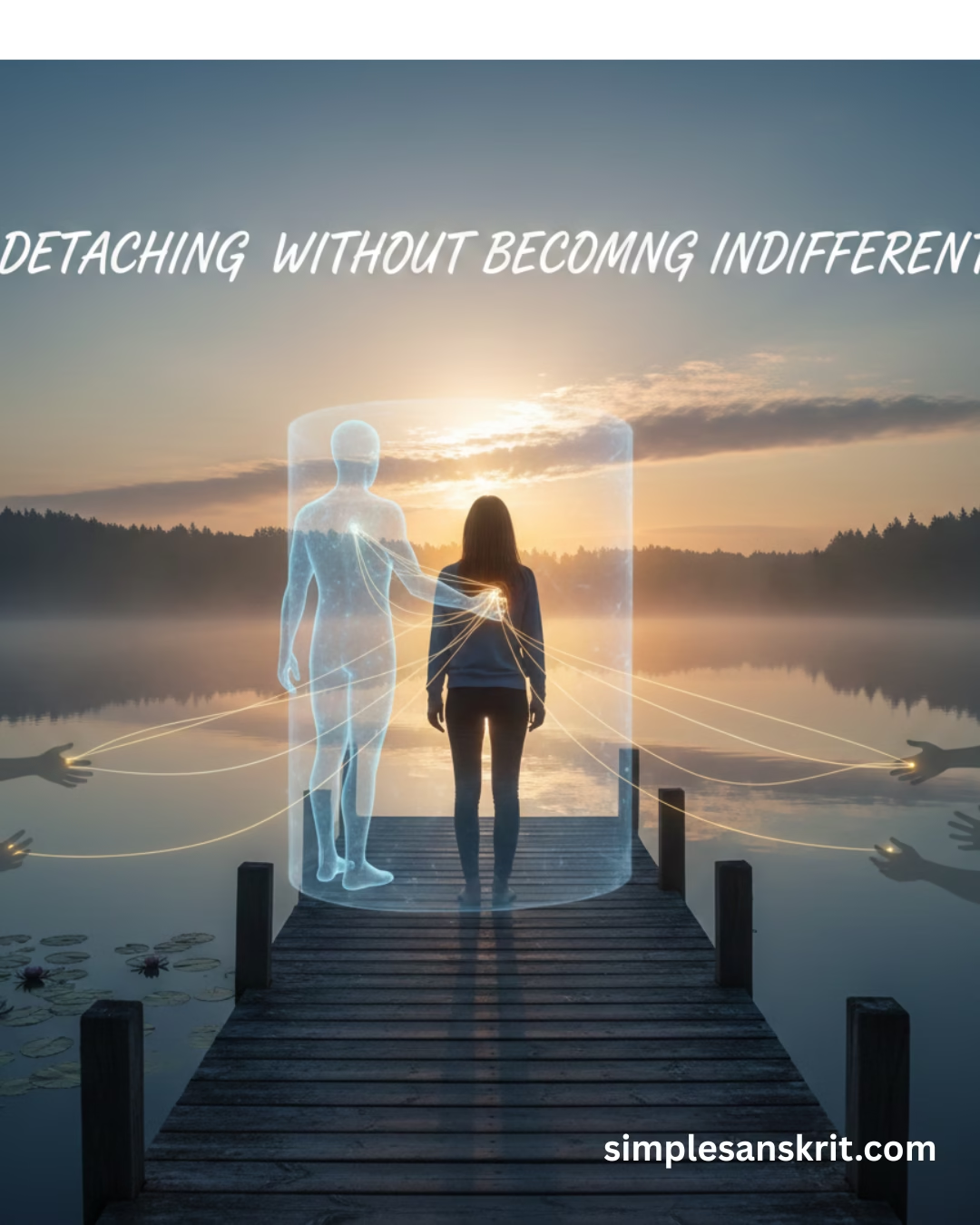
Detaching Without Becoming Indifferent: What the Bhagavad Gita Really Teaches About Letting Go

In modern conversations about mental health, self-care, and spirituality, the word detachment often raises concern. People worry that detaching means becoming emotionally unavailable, disconnected, or uncaring. Some even fear that if they stop holding on tightly—to people, outcomes, or identities—they will lose motivation or meaning altogether.

The Bhagavad Gita offers a very different understanding of detachment—one that is deeply human, psychologically sound, and surprisingly relevant to modern life. According to the Gita, detachment is not about withdrawing from life; it is about engaging fully without being internally enslaved.

This distinction matters today more than ever. We are emotionally over-invested in outcomes we cannot control, constantly measuring our worth through validation, productivity, and relationships. Detachment, as the Gita frames it, is not emotional numbness—it is emotional freedom.

This article explores how to practice healthy detachment without becoming indifferent, using specific Bhagavad Gita verses as practical tools for modern challenges.

Detachment is often misunderstood as “not caring.” In reality, the Gita defines detachment as freedom from compulsive attachment, not freedom from responsibility, love, or effort.

Attachment says:

  • “I need this outcome to feel okay.”
  • “This relationship defines my worth.”
  • “If this fails, I fail.”

Detachment says:

  • “I will act sincerely, but my inner stability does not depend on the result.”

This subtle shift changes how we work, love, lead, and live.

1. Working Hard Without Burning Out

Modern problem: Hustle culture, anxiety around results, identity tied to success.

Bhagavad Gita 2.47
“You have a right to action alone, never to its fruits. Do not let the results of action be your motive, nor let your attachment be to inaction.”

This is one of the most quoted verses of the Gita—and one of the most misunderstood. It does not say “don’t care about results.” It says: don’t let results control your inner state.

In modern terms, this verse teaches process-oriented engagement. You show up, do your best, apply skill and integrity—but you don’t emotionally collapse or inflate based on outcomes.

This mindset:

  • Reduces burnout
  • Improves consistency
  • Encourages long-term thinking
  • Protects mental health

Detachment here is not laziness; it is sustainable excellence.

Many people mistake detachment for withdrawal, but the Gita shows that purpose is discovered through engaged action in ordinary life—not by escaping it, as discussed in this exploration of finding purpose without abandoning daily responsibilities.

2. Caring Deeply in Relationships Without Losing Yourself

Modern problem: Emotional dependency, fear of abandonment, over-giving.

Bhagavad Gita 12.16
“One who is free from expectations, pure, skillful, impartial, and untroubled—such a devotee is dear to Me.”

Many people confuse love with emotional fusion. They believe caring means constantly adjusting themselves to be accepted. The Gita offers a different lens: love without emotional bargaining.

Detachment in relationships means:

  • You care, but you don’t beg.
  • You give, but you don’t erase yourself.
  • You stay present, but you don’t cling.

This verse highlights freedom from expectation, not freedom from affection. It helps prevent resentment, emotional exhaustion, and loss of self-respect—common issues in modern relationships.

3. Staying Engaged Without Being Emotionally Contaminated

 Modern problem: Absorbing stress from work, news, social media, or others’ moods.

Bhagavad Gita 5.10
“One who performs actions without attachment, surrendering them to a higher principle, is not affected—just as a lotus leaf is untouched by water.”

This metaphor is powerful and deeply practical. Like a lotus leaf resting on water without absorbing it, detachment allows you to move through life without internal pollution.

You still:

  • Participate
  • Respond
  • Contribute

But you don’t carry every emotional residue home with you.

This is especially relevant for caregivers, leaders, parents, therapists, and anyone exposed to emotional intensity. Detachment here becomes a form of emotional hygiene.

Gita

4. Letting Go of Control Without Becoming Passive

Modern problem: Micromanagement, anxiety, fear of uncertainty.

Bhagavad Gita 3.19
“Therefore, without attachment, constantly perform the work that must be done. By working without attachment, one attains fulfillment.”

Control is often mistaken for responsibility. The Gita separates the two. Responsibility is about showing up; control is about forcing certainty.

This verse teaches that fulfillment comes not from controlling outcomes, but from right engagement. Detachment helps you:

  • Delegate better
  • Trust processes
  • Adapt instead of panic

This is crucial in leadership, parenting, and creative work—where over-control suffocates growth.

5. Responding Calmly Instead of Reacting Emotionally

Modern problem: Emotional triggers, impulsive responses, regretful reactions.

Bhagavad Gita 2.15
“One who is not disturbed by happiness and distress and remains steady is fit for liberation.”

Detachment creates a pause between stimulus and response. That pause is where wisdom lives.

This verse doesn’t suggest suppressing emotion. It suggests not being hijacked by it. In modern psychological terms, this aligns with emotional regulation and impulse control.

Detached awareness allows you to:

  • Feel anger without becoming cruel
  • Feel sadness without collapsing
  • Feel joy without becoming reckless

This is emotional intelligence at its highest level.

Detachment becomes easier when the body is regulated, which is why breath-based practices combined with mantra chanting can create the inner space needed to respond rather than react.

6. Detaching from Validation and External Approval

Modern problem: Social media comparison, people-pleasing, self-worth issues.

Bhagavad Gita 12.19
“One who is content, independent, and balanced in praise and blame is dear to Me.”

This verse speaks directly to modern validation culture. When praise inflates us and criticism deflates us, we are not free—we are emotionally outsourced.

Detachment here means:

  • Self-worth is internally anchored
  • Feedback is information, not identity
  • Approval is appreciated, not required

This form of detachment is deeply liberating and essential for creative professionals, entrepreneurs, and anyone visible online.

7. Staying Compassionate Without Emotional Drain

Modern problem: Empathy fatigue, emotional burnout, over-responsibility.

Bhagavad Gita 12.13
“One who is compassionate, free from possessiveness and ego, balanced in pleasure and pain…”

Compassion without detachment leads to exhaustion. Detachment without compassion leads to coldness. The Gita integrates both.

This verse shows that compassion is strongest when it is not entangled with ego or ownership. You can care deeply without believing you must fix everyone.

This is especially relevant in:

  • Parenting
  • Helping professions
  • Social activism

Detachment protects compassion from burnout

8. Letting Go of Past Mistakes Without Losing Accountability

 Modern problem: Guilt, shame, rumination.

Bhagavad Gita 18.66
“Abandon all excessive burdens and take refuge in inner wisdom; do not grieve.”

This verse is often spiritualized, but its psychological meaning is powerful. It does not erase responsibility—it releases excessive self-punishment.

Detachment here means:

  • Learn from mistakes
  • Correct behavior
  • Stop replaying self-condemnation

This supports mental health, self-forgiveness, and growth-oriented thinking.

9. Acting Fully While Remaining Internally Free

Modern problem: Fear of commitment, emotional avoidance.

Bhagavad Gita 6.1
“One who performs their duty without attachment to results is a true renunciant, not one who merely withdraws from action.”

This verse directly addresses a common misconception: that detachment means withdrawal. The Gita clearly says the opposite.

True detachment is inner, not external. You can:

  • Have a career
  • Raise a family
  • Build ambitions

And still be internally free.

When detachment feels difficult, gentle affirmations rooted in Sanskrit wisdom can help rewire self-talk, allowing care and compassion without emotional over-identification.

Detachment Is Not Disengagement—It Is Mastery

The Bhagavad Gita does not ask you to step away from life. It asks you to stop letting life step all over your inner peace.

Healthy detachment:

  • Improves relationships
  • Strengthens leadership
  • Protects mental health
  • Enhances clarity and compassion

It allows you to care deeply without suffering unnecessarily.

In a world that constantly pulls at our attention, emotions, and identity, the Gita’s teaching on detachment is not ancient philosophy—it is modern emotional intelligence.

FAQ’s:

 1. What does detachment really mean in the Bhagavad Gita?

In the Bhagavad Gita, detachment means acting fully while remaining free from emotional dependence on outcomes. It is not withdrawal from life, but freedom from anxiety, ego, and compulsive attachment.

2. Does detachment mean not caring about people or results?

No. Detachment does not mean indifference. It means caring deeply without letting your peace depend on how others behave or how situations turn out.

3. How is detachment different from emotional suppression?

Detachment allows emotions to arise without being controlled by them. Emotional suppression ignores or pushes emotions away, while detachment observes emotions without reacting impulsively.

4. Can detachment improve relationships?

Yes. Healthy detachment reduces neediness, resentment, and over-dependence, allowing relationships to be based on respect, presence, and emotional balance rather than fear or control.

5. How can I practice detachment in daily work and career?

By focusing on effort, integrity, and learning instead of obsessing over success or failure. The Gita teaches that excellence comes from committed action without emotional attachment to results.

6. Is detachment compatible with ambition and success?

Absolutely. Detachment supports sustainable ambition by reducing burnout, anxiety, and fear of failure. It helps people pursue goals with clarity instead of pressure.

7. How does detachment help with anxiety and overthinking?

Detachment weakens the habit of mental rumination by separating self-worth from outcomes. This creates mental space, calmness, and better emotional regulation.

8. Can detachment help with guilt and past mistakes?

Yes. Detachment allows learning and accountability without self-punishment. It helps release excessive guilt while encouraging conscious growth.

9. Is detachment relevant for modern life, or only spiritual seekers?

Detachment is highly relevant for modern life. It applies to work stress, relationships, parenting, leadership, and mental health—not just spiritual practice.

10. What is the simplest way to begin practicing detachment?

Start by noticing where your peace depends on outcomes or approval. Then practice giving your best effort while allowing results to unfold without internal resistance.


Author

  • Deep Ranjan Singh - Simplesanskrit.com Founder

    Deep Ranjan Singh
    Deep Ranjan Singh

    Deep is a Certified Life coach specializing in emotional resilience, mental clarity, and self-mastery. For over a decade, he has worked with individuals navigating life transitions, relationship challenges, stress, and inner transformation.

    His professional journey began in the corporate and technology world. He holds a B.Tech degree from IIT Kanpur, and previously worked in the Information Technology sector.

    Over time, however, he felt drawn toward work that focused less on systems and more on human experience—how people think, feel, cope, and grow. That curiosity led him to formally train as a Life Coach and transition into work centered on emotional well-being, clarity, and self-understanding.

    He uses Sanskrit mantras, sounds, and verses for healing and wisdom-sharing purposes in his works.

    You can reach him at deep@iitkalumni.org.

    View all posts