
Contents
ToggleAncient Sounds for a Calm and Focused Mind
Anxiety and overthinking are among the most common mental health challenges today. Constant worry, racing thoughts, and mental fatigue can make it difficult to feel calm or focused. Long before modern psychology existed, ancient Sanskrit traditions recognized the power of sound and rhythm to soothe the mind.
Sanskrit mantras are not religious obligations. They are structured sound patterns designed to bring the nervous system into balance. When used mindfully, they can support emotional regulation, clarity, and inner calm.
Can Sanskrit Mantras Really Help with Anxiety?
Yes, when used correctly.
From a modern perspective, mantra chanting works because it:
Slows down breathing
- Shifts attention away from repetitive thoughts
- Activates the parasympathetic nervous system
- Creates a steady mental rhythm that reduces mental noise
You do not need belief, faith, or prior knowledge. You only need willingness to pause and listen.
What Makes Sanskrit Mantras Unique?
Sanskrit is a phonetic language. Each sound is precise and intentional. Unlike affirmations that rely only on meaning, Sanskrit mantras work through vibration and repetition.
This makes them especially useful for:
- Overthinking
- Restlessness
- Emotional overwhelm
- Difficulty switching off the mind
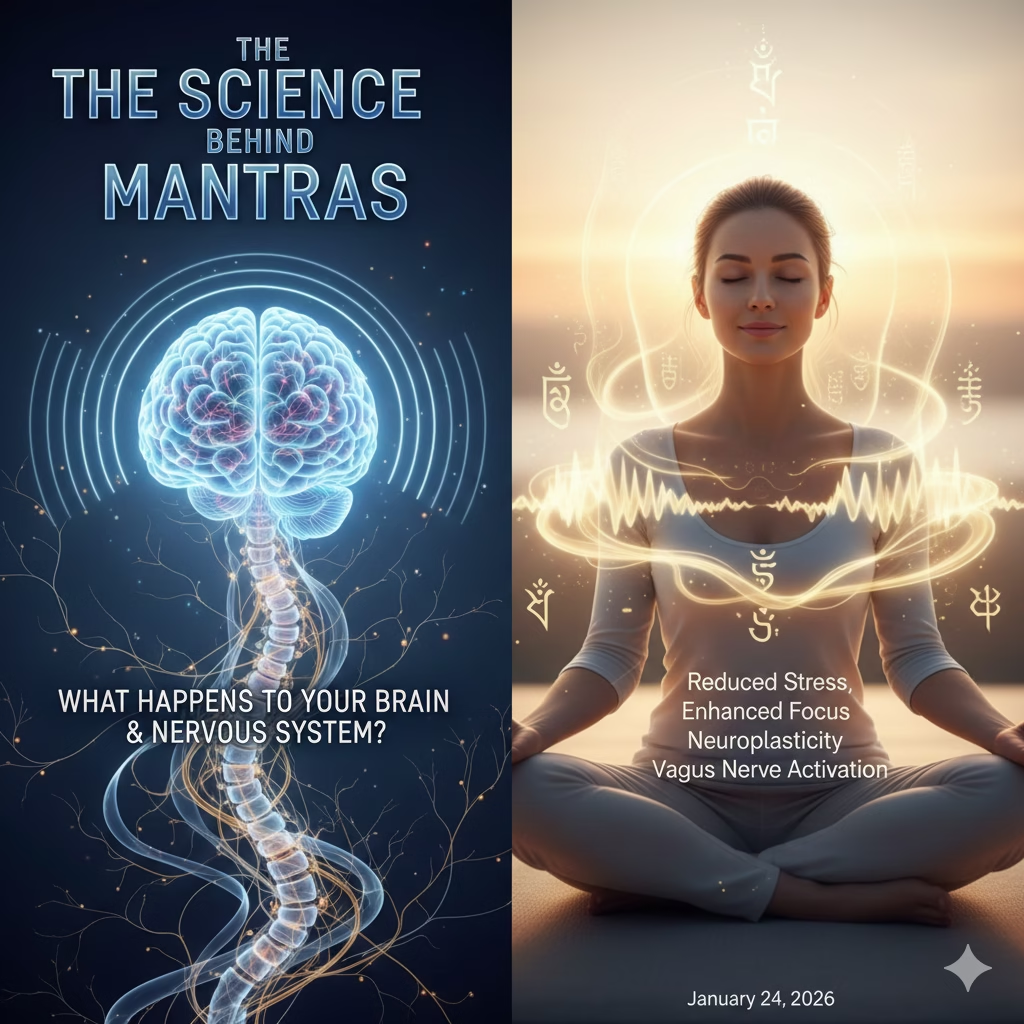
If you’re curious why these sounds affect the mind so deeply, the science behind mantra chanting offers fascinating insights
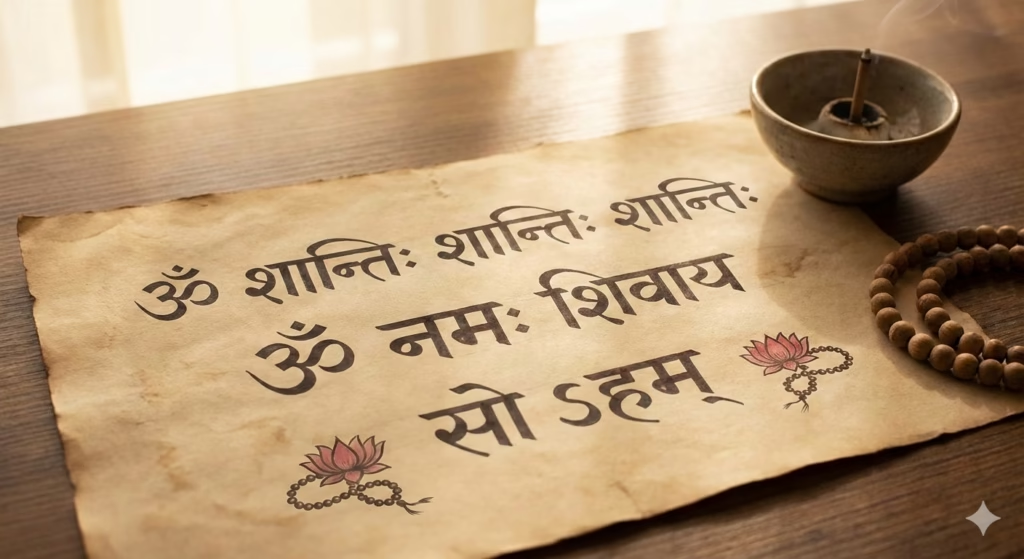
oṃ śāntiḥ śāntiḥ śāntiḥ
Meaning: Peace at the physical, mental, and emotional levels
This mantra is often used at the end of reflective practices because it signals completion and calm.
Why it helps:
- The long sound of “Om” slows breathing
- Repetition of “Shanti” gently reassures the mind
- Creates a sense of closure when thoughts feel endless
How to use:
- Sit comfortably
- Inhale slowly
- Chant the mantra once or three times
- Focus on the vibration rather than the meaning
oṃ namaḥ śivāya
Meaning: I bow to inner stillness and awareness
This mantra is associated with grounding and stability.
Why it helps:
- Breaks the loop of repetitive thoughts
- Encourages mental detachment from worry
- Promotes a sense of inner space
How to use:
- Chant silently if speaking feels uncomfortable
- Use it during moments of mental overload
- Repeat for two to five minutes
Gayatri Mantra
oṃ bhūrbhuvaḥ svaḥ
tatsaviturvareṇyaṃ
bhargo devasya dhīmahi
dhiyo yo naḥ pracodayāt
Meaning: A prayer for clarity and insight
This mantra is traditionally associated with mental illumination.
Why it helps:
- Supports mental clarity
- Reduces confusion driven anxiety
- Encourages balanced thinking
How to use:
- Best used when anxiety comes from indecision or fear of the future
- Chant slowly, without rushing
- Even one repetition can be calming
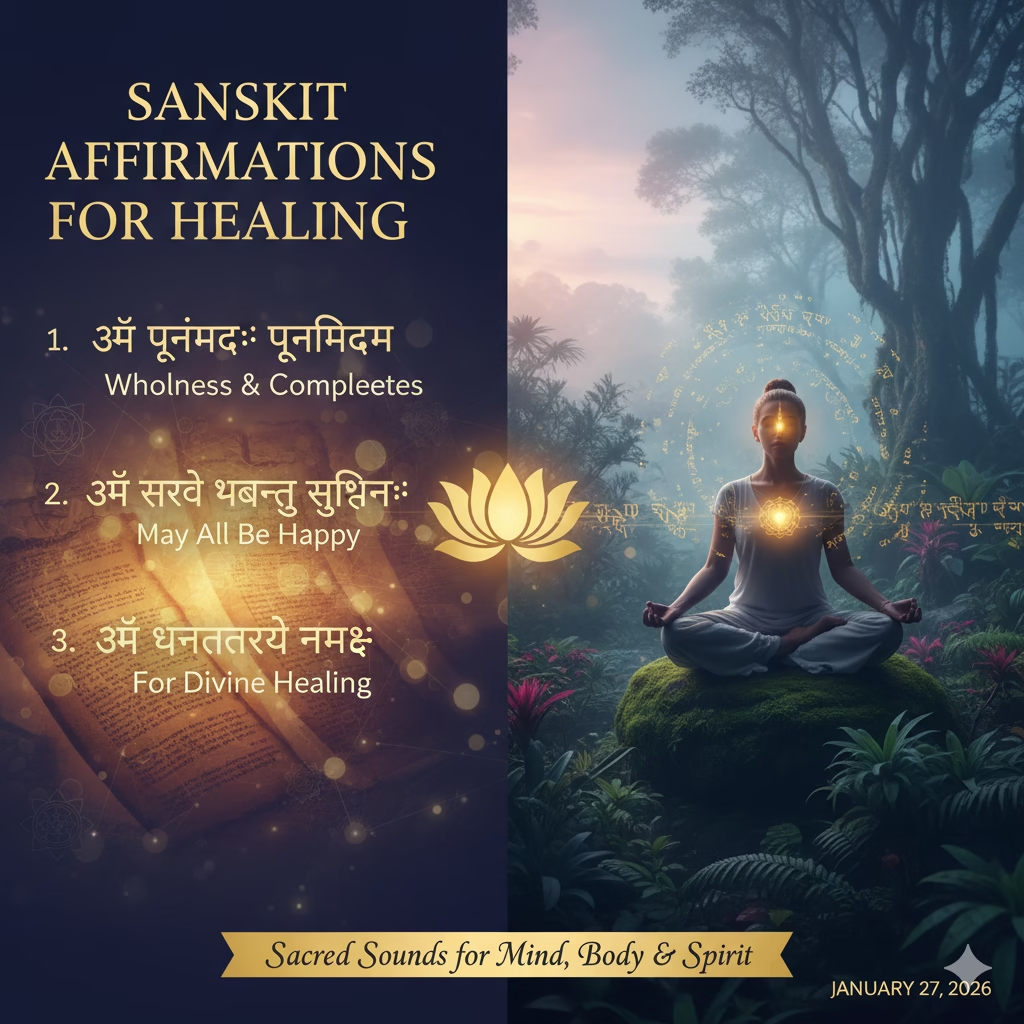
These practices form part of a larger healing framework explained in our guide to Sanskrit affirmations for emotional balance.
When Should You Use Mantras for Anxiety?
Sanskrit mantras are most effective when:
- Thoughts feel uncontrollable
- You feel mentally exhausted
- Before sleep
- During emotional transitions
- After consuming too much information or screen time
They are not meant to suppress emotions, but to create enough calm to observe them clearly.
How Often Should You Chant?
There is no strict rule.
For modern life:
- One to five minutes is enough
- Consistency matters more than duration
- Silent repetition is perfectly acceptable
- This keeps the practice realistic and sustainable.
A Gentle Reflection
Anxiety often arises when the mind is stuck between the past and the future. Sanskrit mantras do not force positivity. They gently return awareness to the present moment.
You are not trying to fix yourself.
You are allowing the mind to rest.
Final Thought
Ancient wisdom survives because it addresses timeless human challenges. Sanskrit mantras are not a replacement for professional support, but they can be a powerful daily companion for emotional balance and mental clarity.
If calm, clarity, and mindful living resonate with you, you may enjoy exploring more reflections on ancient wisdom and modern wellness across this site.
FAQs: Sanskrit Mantras for Anxiety and Overthinking
❓ Do Sanskrit mantras really help with anxiety and overthinking?
Yes. Sanskrit mantras help by calming the nervous system and slowing mental activity. Repeating a mantra regulates breathing, reduces mental noise, and brings attention to the present moment. While not a medical treatment, many people use mantras as a supportive practice for managing stress and anxious thoughts.
❓ Which Sanskrit mantra is best for anxiety?
Mantras like Om Shanti, So Hum, and Om Namah Shivaya are commonly used for anxiety. These mantras create rhythmic sound patterns that help relax the mind and reduce overthinking. The best mantra is one that feels calming and easy for you to repeat consistently.
❓ Can I use Sanskrit mantras even if I am not religious?
Yes. Sanskrit mantras do not require religious belief. They work through sound, rhythm, and breath rather than faith. Many people use them purely as mindfulness tools to support emotional balance, focus, and mental clarity.
❓ How long should I chant a Sanskrit mantra for anxiety?
Even one to five minutes of chanting can be effective. Consistency matters more than duration. Short, regular practice helps the mind settle gradually and makes it easier to manage anxious thoughts during daily life.
❓ Can mantra chanting stop overthinking immediately?
Mantra chanting does not force thoughts to stop instantly. Instead, it gently reduces the intensity of overthinking by shifting attention away from repetitive mental loops. With regular practice, many people notice improved emotional regulation and fewer intrusive thoughts over time.
❓ Is silent chanting as effective as chanting aloud?
Yes. Silent chanting can be just as effective as chanting aloud. Mental repetition works well in situations where speaking is not possible, such as at work or before sleep. The key is focused attention, not volume.
❓ When is the best time to chant mantras for anxiety?
Mantras can be used anytime anxiety arises. Many people find them especially helpful in the morning, before sleep, during stressful moments, or when feeling mentally overwhelmed. There is no fixed rule.
❓ Are Sanskrit mantras scientifically proven to reduce anxiety?
Research suggests that repetitive chanting and rhythmic breathing can activate relaxation responses in the brain. While studies may not always focus specifically on Sanskrit, the calming effects of mantra based practices are widely supported in mindfulness and stress reduction research.
❓ Can Sanskrit mantras replace therapy or medication?
No. Sanskrit mantras are not a replacement for professional mental health care. They can be used as a complementary practice alongside therapy, counseling, or medical treatment to support emotional wellbeing.
❓ Do I need correct pronunciation for Sanskrit mantras to work?
Perfect pronunciation is not required. What matters most is steady repetition and relaxed breathing. Beginners can start slowly and improve pronunciation naturally over time without stress or pressure